
- Solfeggio frequencies are a set of nine tones, including 396 Hz, 528 Hz and 963 Hz, that are promoted online as having specific healing powers.
- Despite the "ancient" label, the modern list of frequencies dates mostly to the 1970s through the 1990s, not to medieval music.
- Research is very limited. A few small studies on 528 Hz and 432 Hz music report short-term relaxation effects, but none show that a frequency can heal the body or repair DNA.
- Calming music at any tuning can help you relax. Use these tracks as a relaxation tool, never as a replacement for medical or mental health care.
You put on a "528 Hz Healing Frequency" track to fall asleep. Then YouTube recommends "963 Hz Connect With Your Higher Self" and "174 Hz Remove Pain." Each video has millions of views and a comment section full of people saying it changed their life.
So what's going on? Are these frequencies real, or is it just relaxing music with a big promise attached? As a music therapy practice, we love curiosity about how sound affects us. We also care a lot about evidence. Here's a fair look at both.
What Are Solfeggio Frequencies?
Solfeggio frequencies are a list of specific sound frequencies, measured in hertz (Hz), that are claimed to have particular effects on the body, mind or spirit. They're usually played as pure tones or built into ambient music, meditation tracks and sleep playlists.
Where Solfeggio Frequencies Come From
The name borrows from solfège, the "do-re-mi" system singers use to learn pitch. That system traces back to an 11th-century monk, Guido of Arezzo, who used the first syllables of each line of a Latin hymn (Ut queant laxis) to name the notes of a scale. Those syllables became "ut, re, mi, fa, sol, la," and later "do, re, mi."

Here's the important part: medieval solfège named notes. It didn't assign them fixed frequencies, and it didn't make health claims. Standardized pitch in hertz didn't exist yet.
The modern "solfeggio frequencies" come from much more recent sources. In the 1970s, Joseph Puleo said he had decoded a set of frequencies using number patterns in the Bible. In 1999, Leonard Horowitz and Puleo popularized the list in a book that also made sweeping claims, including that 528 Hz could repair DNA. From there, the idea spread through wellness websites, and then exploded on YouTube and streaming platforms.
It's also worth knowing that "solfeggio frequency" tracks aren't all the same. Some play a single pure tone. Others layer a tone under ambient music, nature sounds or binaural beats. That makes it even harder to know what, if anything, a specific frequency is doing, because you're usually hearing many sounds at once.
The 9 Solfeggio Frequencies and Their Claims
Here's what each frequency is commonly said to do, compared with what research actually shows.
| Frequency | Common claim | What the evidence says |
|---|---|---|
| 174 Hz | Reduces pain, creates a sense of safety | No controlled studies support pain relief from this frequency |
| 285 Hz | Heals tissues and organs | No scientific evidence |
| 396 Hz | Releases guilt and fear | No scientific evidence |
| 417 Hz | Clears negative energy, helps you change | No scientific evidence |
| 528 Hz | "Love frequency," repairs DNA, reduces stress | One very small study reported lower stress markers. No evidence for DNA repair in people. |
| 639 Hz | Improves relationships and connection | No scientific evidence |
| 741 Hz | Detoxifies, boosts problem-solving | No scientific evidence |
| 852 Hz | Raises intuition, spiritual awakening | No scientific evidence |
| 963 Hz | Connects you to a "higher self" or divine consciousness | No scientific evidence |
"No scientific evidence" doesn't mean someone can't feel calmer listening to these tracks. It means nobody has shown that a specific frequency causes a specific effect better than other relaxing sounds.
What the Research on 528 Hz and 432 Hz Actually Found
Two frequencies get most of the scientific attention: 528 Hz, the most famous solfeggio tone, and 432 Hz, which isn't technically a solfeggio frequency but is often lumped in with them.

528 Hz
The most-cited 528 Hz study, published in 2018, included just nine healthy adults. After five minutes of listening, the researchers reported lower cortisol and better mood scores with 528 Hz music than with the same music at 440 Hz. With such a tiny group and a single short session, the results are interesting but far from proof.
That's essentially the human evidence for 528 Hz. The famous "DNA repair" claim comes from the 1999 book mentioned above, not from clinical research. There are no studies showing that listening to a 528 Hz tone repairs DNA in people.
432 Hz vs 440 Hz
Most modern music is tuned so the note A above middle C is 440 Hz. Some people believe tuning that A down to 432 Hz sounds warmer or feels more "natural."
A 2019 double-blind pilot study by Calamassi and Pomponi compared the same music tuned to 440 Hz and 432 Hz. Listeners showed a slightly larger drop in heart rate with the 432 Hz version and reported feeling more satisfied. The authors called it a pilot and asked for larger studies.
Small follow-up studies from the same group have reported similar mild effects. That's worth noting. But "a few beats per minute slower in a small pilot study" is a long way from "432 Hz heals the body." One simple explanation: music tuned lower sounds slightly lower and mellower, which many people find more relaxing.
Why 440 Hz became the standard
You'll often hear that 440 Hz tuning is "unnatural" or was chosen for sinister reasons. The history is more ordinary. For centuries, orchestras around the world tuned to many different pitches, which made it hard for musicians and instrument makers to work together. Over the 19th and 20th centuries, countries and music organizations gradually settled on A = 440 Hz as a shared reference so everyone could play in tune. It was a practical decision, not a health decision. And today, plenty of musicians still tune a little higher or lower for artistic reasons.
Why These Tracks Can Still Feel Relaxing
If the evidence is thin, why do so many people swear by solfeggio tracks? A few likely reasons:
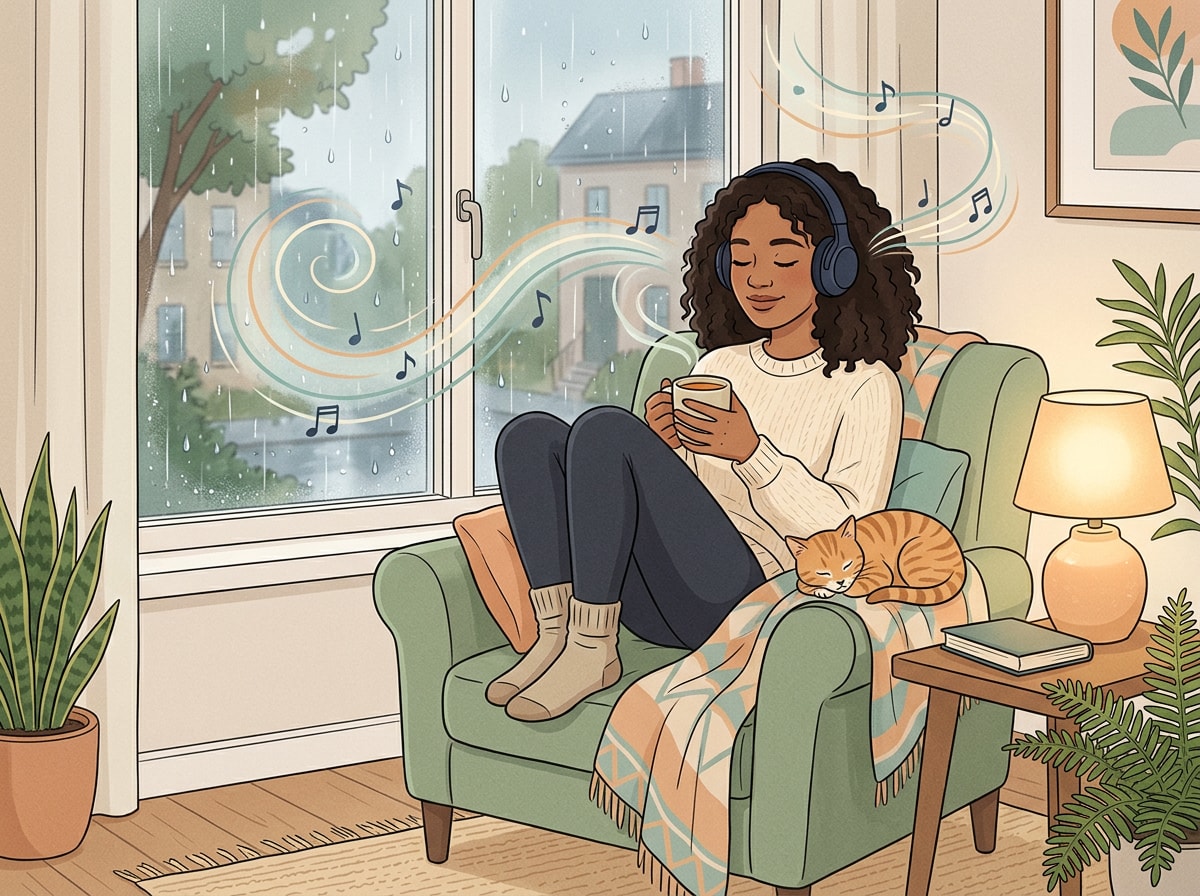
- The music itself is calming. Most solfeggio tracks are slow, steady, ambient and free of lyrics. That style of music tends to help people relax, regardless of the exact frequency.
- Expectation matters. If you believe a track will help you sleep, your body may respond to that belief. This is real, and it's one reason good research uses comparison groups.
- The ritual helps. Lying down, closing your eyes and pressing play is itself a relaxation routine.
- Attention shifts. Focusing on a steady sound can quiet a racing mind, similar to meditation.
None of that is a bad thing. It just means the benefit probably comes from listening to calming sound in a calming way, not from a magic number. We take a similar evidence-first look at other popular sound claims in Do Binaural Beats Help With Anxiety? and Binaural Beats for Better Sleep.
How to Judge a Sound Healing Claim
Sound and wellness content is everywhere, and much of it is selling something. A few quick questions can help you separate curiosity from hype.
- Is there a real study? Look for a link to a peer-reviewed journal, not just "studies show" or "scientists discovered."
- How big was it? A study with nine people is a starting point, not a conclusion.
- Was there a comparison? Good studies compare the sound to something else, like the same music at a different tuning or silence.
- Does the claim match the study? A study on short-term mood can't support claims about healing organs or repairing DNA.
- Who benefits if you believe it? Be cautious when the person making the claim is also selling the product.
How to Use Solfeggio Frequencies Safely
- Keep the volume low. Especially with headphones or while falling asleep. Long exposure to loud sound can damage hearing.
- Treat them as relaxation, not treatment. Enjoy them for winding down, focus or meditation.
- Watch for upsells. Be cautious of products or programs that charge high prices for "special" frequencies or promise to cure illness.
- Notice how you actually feel. If a track makes you anxious, headachy or restless, switch to something else.
Never use frequency tracks in place of medical care for pain, illness, anxiety, depression or sleep problems. If symptoms are ongoing, getting worse or affecting daily life, talk to a doctor or mental health professional. Sound can be a helpful companion to real care. It isn't a substitute for it.
This kind of honest mythbusting is something we care about across topics. If you like this approach, you might enjoy Safety and Mythbusting: How to Stimulate Your Vagus Nerve the Right Way and Is Rap Music Bad for Your Brain? What the Research Actually Says. And if you're drawn to sound-based relaxation in a group setting, our guide to what a sound bath is covers what to expect.
FAQ
What are solfeggio frequencies?
Solfeggio frequencies are a set of nine sound frequencies, including 174 Hz, 396 Hz, 528 Hz and 963 Hz, that are promoted online as having specific healing or spiritual effects. The name comes from the medieval do-re-mi singing system, but the modern list of frequencies and their claimed effects were popularized mainly in the 1970s through the 1990s.
Does 528 Hz repair DNA?
There is no scientific evidence that listening to 528 Hz repairs DNA in people. The claim was popularized in a 1999 book, not in clinical research. One small 2018 study of nine adults reported lower stress markers after listening to 528 Hz music, but it did not measure DNA and was too small to draw firm conclusions.
Is 432 Hz better than 440 Hz?
Some small pilot studies have found that music tuned to 432 Hz produced slightly lower heart rates and higher listener satisfaction than the same music at 440 Hz. However, the studies were small, and the differences were modest. There is no strong evidence that 432 Hz is healthier. Many people simply find slightly lower-tuned music more relaxing.
Can frequencies heal the body?
There is no reliable evidence that specific sound frequencies heal disease, repair tissue or cure illness. Music and sound can help people relax, lower stress and cope with symptoms, which can support overall well-being. Any health concern should be evaluated and treated by a doctor, with sound used only as a complement to care.
Are solfeggio frequencies safe to listen to while sleeping?
For most people, listening to solfeggio tracks at a low volume while falling asleep is safe. To protect your hearing, keep the volume low, consider using a speaker instead of headphones, and set a sleep timer. If you have tinnitus or sound sensitivity, or ongoing sleep problems, talk to a doctor.
What's the difference between solfeggio frequencies and binaural beats?
Solfeggio frequencies are specific single tones, such as 528 Hz, played through speakers or headphones. Binaural beats play two slightly different tones in each ear through headphones, and the brain perceives a third "beat" at the difference between them. Binaural beats have been studied more, though results are still mixed for sleep and anxiety.
One Last Thing
It's okay to enjoy a 528 Hz playlist. Relaxing sound is a real and useful tool. Just know what you're getting: calming music, not a cure. Stay curious, keep the volume low, and look to real care for real problems.
If you want to explore how music can support your mental health in a way that's personalized and evidence-based, music therapy may be a good next step. Learn more in our guide to what music therapy is.
