
- Music therapy is a clinical, evidence-based health profession in which a credentialed music therapist uses music to help people reach individual goals.
- Sessions can include listening, singing, playing instruments, songwriting and talking, and you don't need any musical skill to benefit.
- Music therapy supports people with anxiety, depression, trauma, autism, ADHD, dementia, chronic pain, cancer and more, always alongside medical care, never instead of it.
- In the US, music therapists earn the MT-BC credential after a degree, at least 1,200 hours of clinical training and a national board exam.
- Music therapy can happen in person or through telehealth, and some insurance plans cover it.
Most of us already know that music changes how we feel. A song can calm you down, pump you up or bring back a memory in seconds.
Music therapy takes that everyday experience and turns it into structured, goal-focused care. If you're new to the idea, this guide covers the basics: what it is, how it works, who it helps, what a session looks like and how to get started. Along the way, we'll point you to deeper articles on each topic.
What Is Music Therapy?
Music therapy is the clinical use of music interventions, such as listening, singing, playing instruments and songwriting, to help a person reach individualized health goals within a therapeutic relationship. It is delivered by a credentialed professional who has completed an approved music therapy program.
That definition closely follows the one used by the American Music Therapy Association, which describes music therapy as the clinical and evidence-based use of music to accomplish individual goals. The key words are clinical, individualized and relationship. Listening to a calming playlist on your own can be great self-care. Music therapy is different: a trained therapist assesses your needs, sets goals with you, and adjusts the music to help you get there.
Want to understand why it works? We go deeper in How Does Music Therapy Work? Inside the Mechanism That Heals.
A Brief History of Music Therapy
People have connected music and healing for thousands of years. But modern music therapy as a profession took shape in the 20th century. After World War I and World War II, musicians played for veterans in hospitals, and doctors and nurses noticed real changes in patients' mood and engagement. Hospitals began asking for musicians with clinical training, and the first university degree programs in music therapy followed in the 1940s.
Since then, the field has grown into a recognized health profession with national standards, board certification, research journals and therapists working in hospitals, schools, hospices, private practices and online.
How Music Therapy Works, in Brief
Music engages many parts of the brain at once, including areas involved in emotion, memory, movement, attention and language. That's part of why it can reach people in ways that talking alone sometimes can't.
- Emotion. Music can help people notice, express and regulate feelings that are hard to put into words.
- Body. Tempo and rhythm can influence breathing and muscle tension, and help organize movement.
- Memory. Familiar songs can unlock memories and strengthen connection, which is especially meaningful in dementia care.
- Connection. Making music with another person builds trust and a sense of being heard.
What a Music Therapy Session Looks Like
No two sessions are exactly alike, because they're built around the person. But most follow a similar flow.
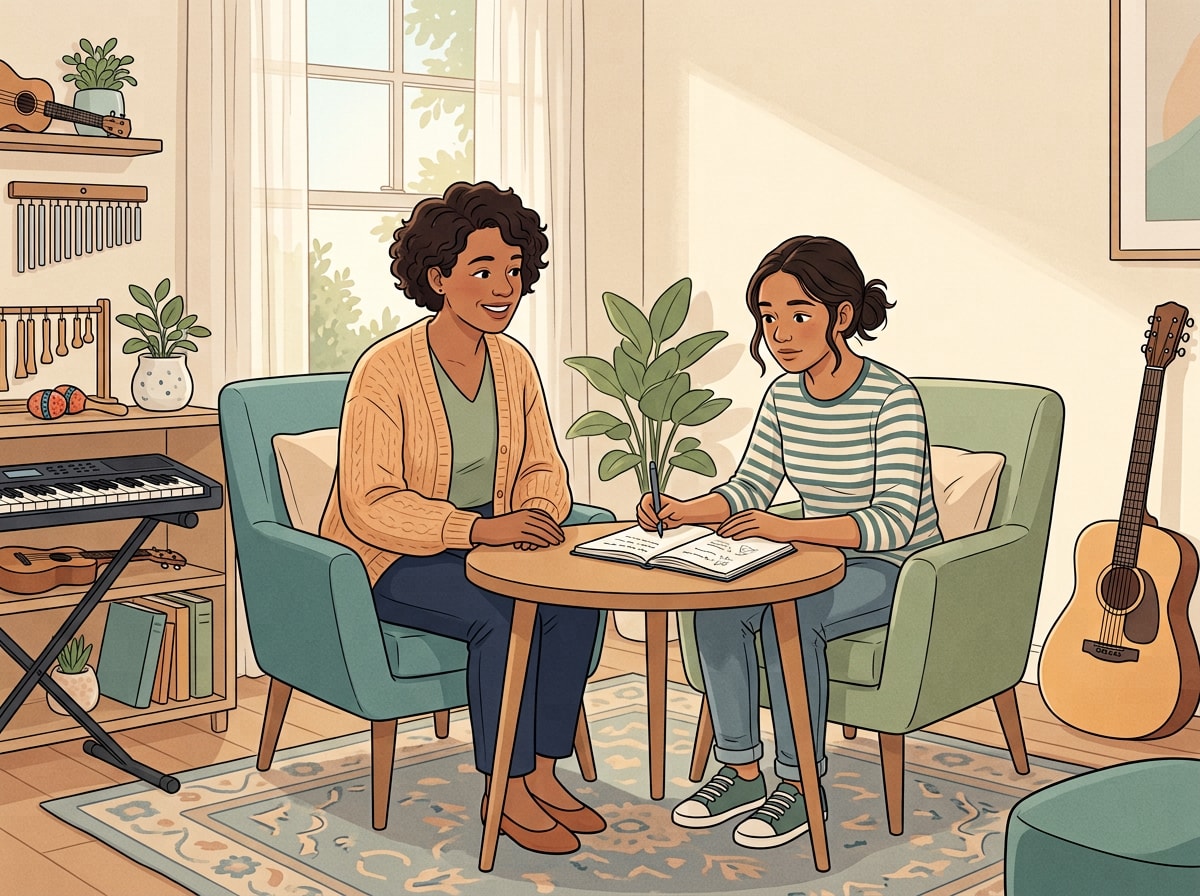
- Check-in. The therapist asks how you're doing and what's on your mind today.
- Warm-up. Often a simple musical activity, like choosing a song, breathing to a rhythm or improvising on a drum.
- Main activity. This might be listening to a song and talking about it, writing lyrics about something you're going through, playing an instrument to release tension, or practicing a coping skill with music.
- Reflection. You and your therapist talk about what came up and how it connects to your goals.
- Closing. Sessions often end with a calming or grounding piece of music, and sometimes a small "music homework" idea.
Sessions usually last 30 to 60 minutes. For a first-person look at what this actually feels like, read A Visceral Experience: What Music Therapy Is Actually Like.
What happens in the first session? Your first session is usually an assessment. The therapist will ask about your history, your goals, your music preferences and what's going on in your life right now. You might try a few simple musical activities so they can see what feels comfortable. From there, you and your therapist build a plan together, and that plan changes as you make progress.
Do you need musical skills? No. You don't need to sing well, read music or play an instrument. The music is a tool for expression and connection, not a performance.
Who Music Therapy Helps
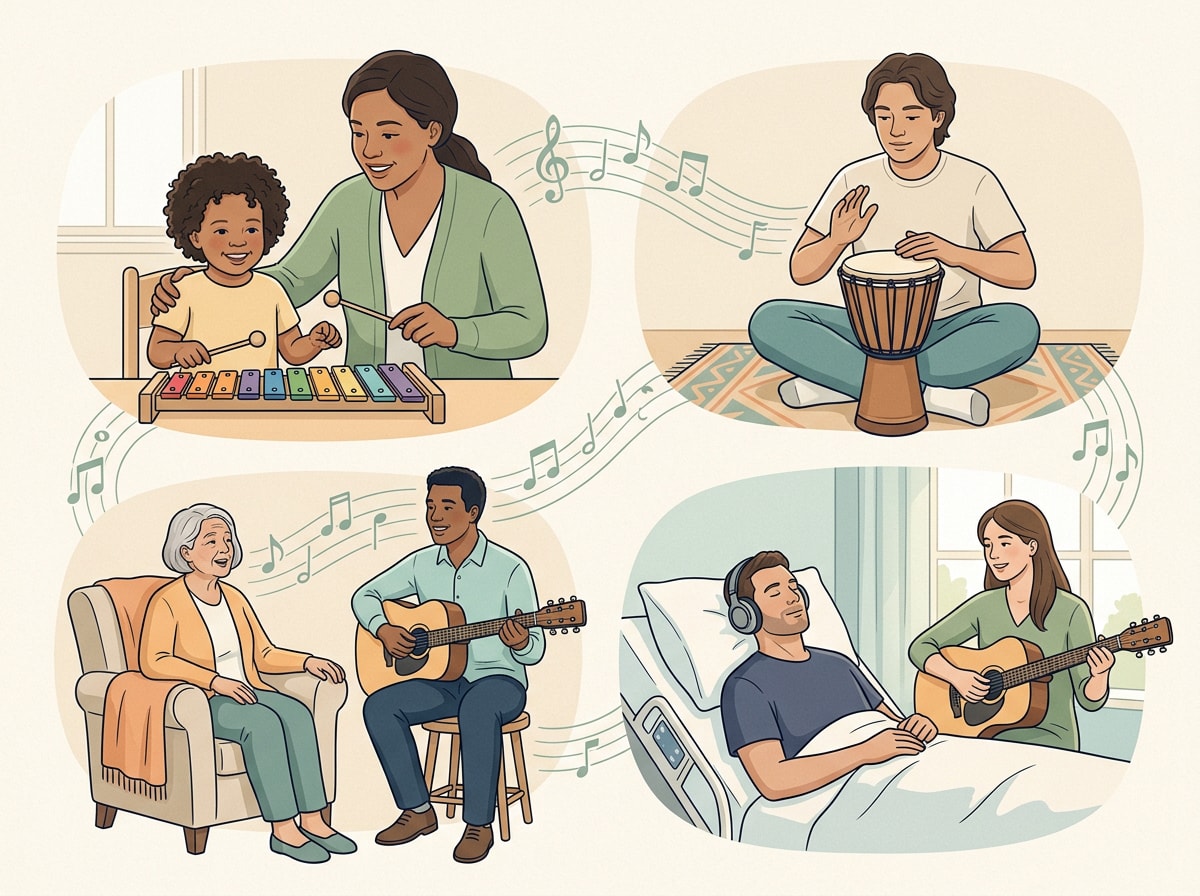
Music therapists work with people of all ages in hospitals, schools, hospices, private practices, rehabilitation centers and online. Common areas include:
- Anxiety and stress. Learning to calm the body and mind with music-based coping skills.
- Depression. Building expression, motivation and connection.
- Trauma and PTSD. Processing difficult experiences safely. See how music therapy helps with PTSD and trauma recovery.
- Autism. Supporting communication, social connection and regulation.
- ADHD. Using rhythm and structure to support focus and organization.
- Dementia and Alzheimer's. Reaching memory, mood and connection when words get harder.
- Cancer and serious illness. Easing distress and supporting coping. See how music therapy can help cancer patients.
- Stroke and neurological conditions. Supporting speech, movement and rehabilitation, sometimes through Neurologic Music Therapy, a research-based approach that uses rhythm and melody to retrain the brain.
- Chronic pain. Reducing perceived pain and the stress that comes with it.
Research on music therapy is growing. A Cochrane review, one of the most rigorous types of evidence summary, found that music therapy added to usual care likely reduces depressive symptoms in the short term compared with usual care alone. The reviewers also noted the need for longer and larger studies.
Evidence is stronger for some conditions than others, and it's always best viewed as part of a broader care plan. Music therapy complements medical and mental health treatment. It doesn't replace it.
Active vs Receptive Music Therapy
Music therapy approaches fall into two broad groups, and most therapists blend both.
| Active music therapy | Receptive music therapy | |
|---|---|---|
| What you do | Make music: sing, play, improvise, write songs | Listen to music and respond: reflect, relax, imagine, discuss |
| Examples | Drumming, songwriting, vocal exercises, improvising on keyboard | Guided relaxation, lyric analysis, music-assisted imagery |
| Often helpful for | Expression, motor skills, communication, confidence | Relaxation, emotional processing, pain and anxiety management |
Learn more in What Is Active Music Therapy? and our overview of the different types of music therapy.
How long does it take to see results? It depends on the person and the goal. Some people feel calmer after a single session. Longer-term goals, like building new coping skills, improving communication or processing trauma, usually take weeks or months of regular sessions. Your therapist will check progress with you along the way and adjust the plan if something isn't working.
Who Can Practice Music Therapy?
In the United States, the standard credential is MT-BC (Music Therapist, Board Certified). To earn it, a music therapist typically:
- Completes a bachelor's degree or higher in music therapy from a program approved by the American Music Therapy Association
- Finishes at least 1,200 hours of supervised clinical training, including an internship
- Passes the national board certification exam from the Certification Board for Music Therapists (CBMT)
- Keeps the credential through continuing education and recertification every five years
Some states also require a separate license or have title protection for music therapists. Training includes music, psychology, human development, clinical methods and research.
Music therapy is a small but growing profession. The Certification Board for Music Therapists reported that the number of board-certified music therapists had reached more than 9,000 by the end of 2020, even through the challenges of the pandemic.
Curious about the career side? See How Do You Become a Music Therapist?
Music Therapy vs Sound Healing and Sound Baths
People often confuse music therapy with sound healing or sound baths. Sound baths and sound healing are wellness practices focused on relaxation, and training isn't regulated. Music therapy is a credentialed clinical profession with assessments, goals and a treatment plan. Both can be valuable. They just aren't the same thing. If you're curious about that side of things, read what a sound bath is and what the research says.
In-Person vs Telehealth Music Therapy
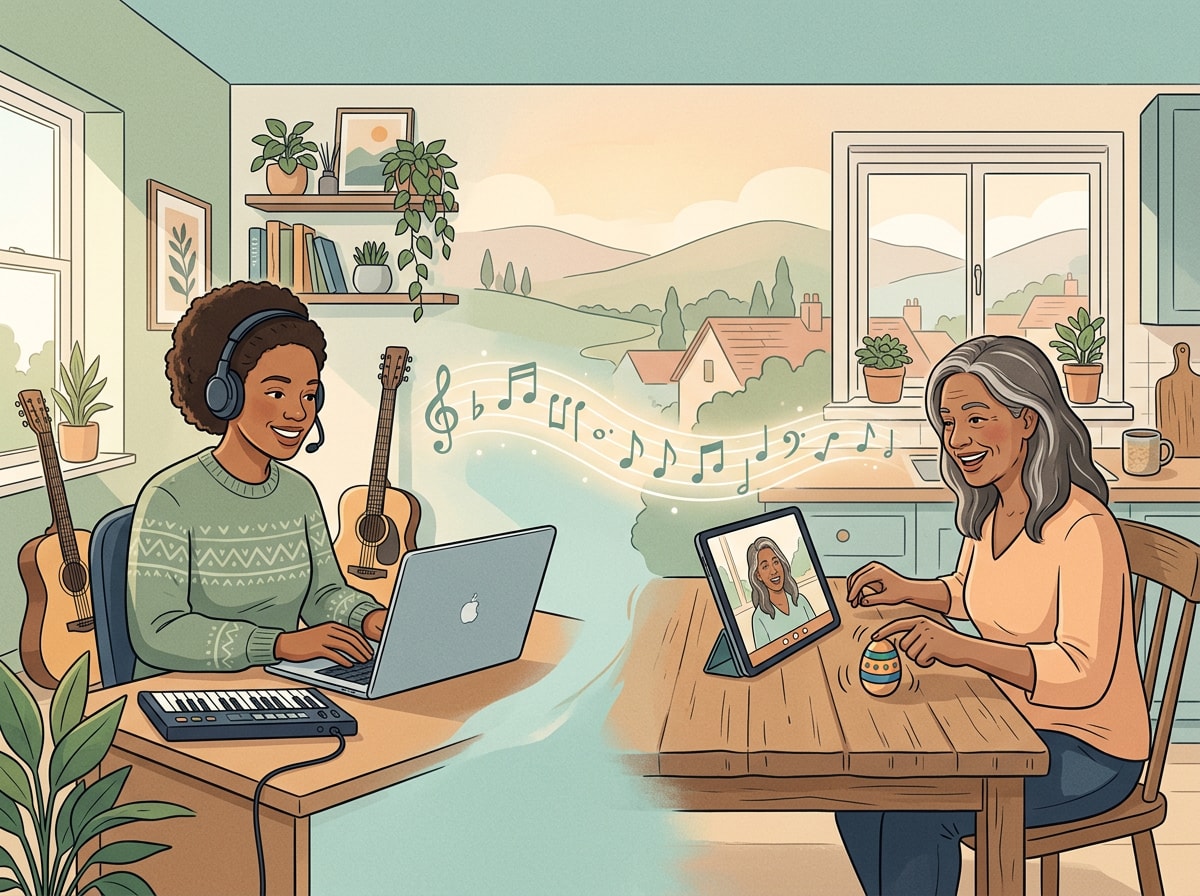
Music therapy used to happen almost entirely in person. Today, many people work with a music therapist online through secure video sessions.
| In-person | Telehealth | |
|---|---|---|
| Where | Clinic, hospital, school, care facility or home visit | Your home, by secure video |
| Instruments | Therapist brings a wide range | Your voice, simple household items, any instrument you have, or none at all |
| Best for | Hands-on rehab, young children, people who prefer in-person connection | Busy schedules, limited mobility, rural areas, people who feel more at ease at home |
| Access | Limited by local availability | Can connect you with a therapist who specializes in your needs, wherever they're based |
Incadence provides music therapy through telehealth for adults 18 and older, so you can work with a board-certified music therapist from home.
Cost and Insurance
Music therapy costs vary by location, setting and session length. Private sessions are often priced similarly to other therapy sessions, and group sessions usually cost less per person.
Insurance coverage depends on your plan, your diagnosis and how the service is billed. Some plans cover music therapy when it's part of a treatment plan, and some people use health savings or flexible spending accounts. We explain how to check your coverage in Is Music Therapy Covered by Insurance?
How to Get Started
- Think about your goals. Less anxiety? Better sleep? Support after a diagnosis? A way to express things you can't put into words?
- Talk with your care team. Let your doctor or therapist know you're interested. Music therapy works best as part of your overall care.
- Look for the MT-BC credential. It's the clearest sign you're working with a qualified music therapist.
- Book a consultation. A short first call helps you ask questions and see if it feels like a good fit.
For more on choosing the right person, see How to Find a Music Therapist.
Music therapy is not emergency care and does not replace medical or psychiatric treatment. If you're in crisis or thinking about harming yourself, contact emergency services or call or text 988 to reach the 988 Suicide & Crisis Lifeline in the US.
FAQ
What is music therapy?
Music therapy is a clinical, evidence-based health profession in which a credentialed music therapist uses music interventions, such as listening, singing, playing instruments and songwriting, to help a person reach individualized goals within a therapeutic relationship. It is used to support mental, emotional, physical, cognitive and social well-being alongside other care.
What does a music therapist do?
A music therapist assesses a person's needs, sets goals with them, and designs music-based activities to reach those goals. This can include guided listening, singing, playing instruments, improvising, writing songs and talking about the experience. Music therapists track progress over time and often work with doctors, therapists, teachers or care teams.
Do you need musical skills for music therapy?
No. You do not need to sing well, read music or play an instrument to benefit from music therapy. The music therapist adapts every activity to your comfort and abilities. The focus is on expression, connection and reaching your goals, not on musical performance or talent.
Is music therapy evidence-based?
Yes, music therapy is an evidence-based practice, and research supports its use for several needs, including depressive symptoms, anxiety and some aspects of autism and dementia care. The strength of evidence varies by condition, and many studies call for larger trials. Music therapy is best used as a complement to medical and mental health treatment.
Does insurance cover music therapy?
Some insurance plans cover music therapy, especially when it is part of a documented treatment plan, but coverage varies widely by plan, state and diagnosis. Some people pay out of pocket or use health savings or flexible spending accounts. Check with your insurer and ask the music therapy provider how they bill.
Can music therapy be done online?
Yes. Many board-certified music therapists offer telehealth sessions through secure video. Online music therapy can include listening, singing, songwriting, rhythm activities and conversation, using your voice or simple instruments at home. It can be especially helpful for people with busy schedules, limited mobility or no local music therapist.
One Last Thing
Music therapy meets you where you are. You don't need talent, a special instrument or the right words. You just need curiosity and a qualified therapist who can turn music into a path toward your goals, alongside the rest of your care.
