
- A sound bath is a guided relaxation session where you lie or sit still while a practitioner plays instruments like singing bowls, gongs and chimes.
- Early research suggests sound baths may ease tension and improve mood for some people, but most studies are small and many have no control group.
- Sound baths are generally gentle, but loud gongs or strong vibrations aren't right for everyone, including people with sound sensitivity or certain health conditions.
- A sound bath is a wellness practice. It is not the same as music therapy, which is a clinical treatment delivered by a board-certified music therapist.
Maybe you saw one on Instagram. A room full of people on yoga mats, eyes closed, while someone moves between glowing crystal bowls. Or maybe your yoga studio just added one to the schedule.
Either way, you're probably wondering what a sound bath actually is, and whether it does anything. As a music therapy practice, we get this question a lot. Here's an honest guide to what happens, what it feels like, and what the research really says.
What Is a Sound Bath?
A sound bath is a meditative experience in which you rest quietly while a practitioner plays resonant instruments, such as singing bowls, gongs, chimes and tuning forks, so the sound "washes over" you. There's no water involved. The goal is deep relaxation, not treatment of a specific condition.
Sound baths borrow from older traditions, including the use of singing bowls in parts of Asia and gong meditation in some yoga practices. Today they're offered in yoga studios, wellness centers, spas, retreats and online.
What Happens During a Sound Bath?
Every practitioner runs things a little differently, but most sessions follow a similar pattern.
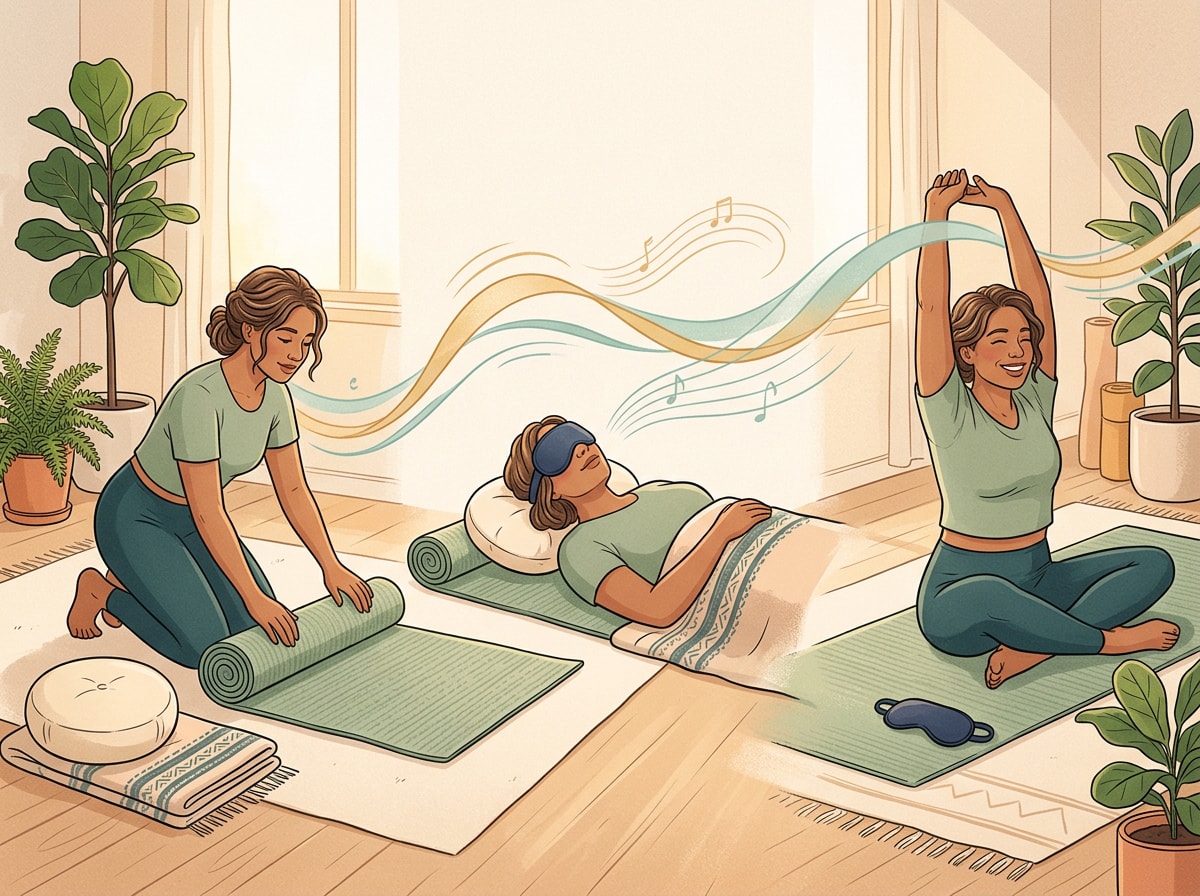
- You get comfortable. Most people lie on a mat with a pillow and blanket. Some sit in a chair. An eye mask is common.
- A short introduction. The practitioner may guide a few slow breaths or set an intention for the session.
- The sound begins. Instruments are played softly at first, then layered. Tones may swell and fade, overlap, or move around the room.
- You simply listen. There's nothing to do. Your mind may wander, you may feel the vibrations, or you may fall asleep. All of that is normal.
- A gentle return. The sound fades to silence, and you're given a few minutes to stretch and sit up slowly.
Most sound baths last 45 to 90 minutes. Shorter guided sessions online can be 10 to 30 minutes.
What does it feel like? People describe it in very different ways. Calm, sleepy, floaty, emotional, restless at first, then settled. Some people feel the vibrations in their chest or hands. Others mostly notice how busy their thoughts are. There's no "right" experience.
Instruments Used in a Sound Bath

| Instrument | What it sounds like | How it's played |
|---|---|---|
| Metal singing bowls (often called Tibetan or Himalayan bowls) | Warm, layered tones with long, wavering overtones | Struck with a mallet or rubbed around the rim |
| Crystal singing bowls | Pure, bright, sustained tones that can feel very "full" in a room | Rubbed around the rim with a suede mallet |
| Gongs | Deep, rumbling waves of sound that can build to a powerful roar | Struck or brushed with soft mallets |
| Chimes | Light, sparkling tones often used for transitions | Gently brushed or tapped |
| Tuning forks | Clean, single pitches | Struck and held near the ears, or placed on the body by some practitioners |
| Ocean drums and rain sticks | Soft, nature-like textures | Tilted or rolled slowly |
Sound Bath Benefits: What the Research Suggests
Here's the honest picture. Research on sound baths is still young. A handful of studies look promising, but most are small, short-term and not designed to rule out other explanations, such as simply lying down in a quiet room for an hour.
In one of the most-cited studies, researchers at the University of California, San Diego found that 62 adults reported significantly less tension, anger, fatigue and depressed mood after a singing bowl meditation. It was an observational study with no comparison group, so it shows how people felt afterward, not whether the bowls themselves caused the change.
What the evidence suggests so far:
- Relaxation and mood. Several small studies report that people feel calmer and less tense after singing bowl sessions.
- Anxiety. Some early studies suggest short-term reductions in anxiety, especially for people new to meditation.
- Sleep. There's limited direct evidence on sound baths and sleep. Many people find them relaxing in the evening, which may help them wind down, but this hasn't been well studied.
- Pain. A few studies have explored singing bowls for pain, with mixed and preliminary results.
A 2020 systematic review in Complementary Therapies in Medicine found only four peer-reviewed studies on singing bowls and health, and concluded that, given the small number of studies and risk of bias, singing bowl therapies could not yet be recommended as a health treatment. A newer 2025 review of a wider set of clinical studies found that singing bowls may have potential to ease anxiety and depression and improve sleep quality, while still calling for better research.
So, does a sound bath "work"? For relaxation, many people find it does, and that has value. For treating anxiety, depression, insomnia or pain, the evidence isn't strong enough to rely on it. If you're curious about how sound affects stress more broadly, we explain the science in Your Brain on Music: How Sound Shapes the Stress Response.
Possible Negative Effects and Who Should Skip It
Sound baths are generally low risk, but "gentle" doesn't mean right for everyone. People sometimes report:
- Feeling overwhelmed or anxious when sounds get loud or intense, especially gongs
- Headaches, dizziness or ear discomfort
- Unexpected emotions, including sadness or old memories coming up
- Discomfort from lying still on the floor for a long time
- Have tinnitus, hyperacusis or other sound sensitivity
- Have epilepsy or a seizure disorder
- Have a pacemaker or other implanted device, especially if instruments will be placed on your body
- Are pregnant
- Have PTSD or a trauma history, since intense sound or darkness can sometimes trigger distress
You can always ask the practitioner to keep volume low, skip on-body instruments, or let you sit near the door. And it's always okay to step out.
Sound Bath vs Meditation vs Music Therapy
These get mixed up a lot. Here's how they differ.

| Sound bath | Meditation | Music therapy | |
|---|---|---|---|
| What it is | Relaxation while listening to resonant instruments | A mental practice of focused attention or awareness | A clinical, evidence-based health profession |
| Who leads it | A sound practitioner (training varies, not regulated) | A teacher, an app, or yourself | A board-certified music therapist (MT-BC) |
| Goal | General relaxation and well-being | Attention, awareness, calm | Individual goals, such as reducing anxiety, improving communication or coping with pain |
| Your role | Mostly passive listening | Active mental practice | Can be listening, singing, playing, writing songs or talking |
| Personalized? | Usually group, not tailored | Sometimes | Yes, based on an assessment and treatment plan |
Music therapy uses music within a therapeutic relationship to reach specific health goals. If you want to understand the range of approaches, see The Types of Music Therapy: What's Best for Me? or our full guide to what music therapy is and how it works.
How to Prepare for Your First Sound Bath
A little preparation makes the experience more comfortable, especially the first time.
- Ask about the format. Find out how long the session lasts, how loud it gets, and whether instruments will be placed on or near your body.
- Wear comfortable layers. Your body temperature can drop when you lie still for an hour.
- Bring what helps you rest. A yoga mat, a pillow, a blanket or an eye mask. Many studios provide these, but your own can feel more comfortable.
- Eat lightly beforehand. A heavy meal can make it harder to relax, and an empty stomach can be distracting.
- Arrive a few minutes early. It gives you time to settle in and choose a spot. If you're sensitive to sound, pick a place farther from the gong.
- Let go of expectations. Some people feel deeply relaxed the first time. Others feel restless until the second or third session. Both are normal.
Afterward, give yourself a few quiet minutes before driving or jumping back into a busy day, and drink some water.
How to Try a Sound Bath at Home
- Pick a quiet time when you won't be interrupted for 20 to 30 minutes.
- Lie down somewhere comfortable with a pillow under your knees and a blanket.
- Choose a recorded sound bath or singing bowl track. Use speakers or headphones at a low, comfortable volume.
- Dim the lights and take a few slow breaths.
- Let your attention rest on the sound. When your mind wanders, gently come back to it.
- When it ends, lie still for a minute before getting up slowly.
Evening sessions pair well with a wind-down routine. For more ideas, see How to Create a Calming Nighttime Routine. If you're also curious about binaural beats for sleep, we look at that evidence in Binaural Beats for Better Sleep: Are They Scientifically Proven?
FAQ
What is a sound bath?
A sound bath is a meditative relaxation session in which you lie or sit quietly while a practitioner plays resonant instruments such as singing bowls, gongs, chimes and tuning forks. The sound is meant to "wash over" you. No water is involved, and the goal is relaxation rather than treating a medical condition.
What do you do during a sound bath?
During a sound bath, you mostly rest and listen. You usually lie on a mat with a pillow and blanket, close your eyes, and let your attention settle on the sounds. There is nothing to perform or achieve. It is normal for your mind to wander, to feel vibrations, to feel emotional or to fall asleep.
Are sound baths good for sleep?
Some people find sound baths relaxing in the evening, which may help them wind down before bed. However, there is little direct research on sound baths and sleep. If you have ongoing trouble sleeping, talk with a doctor, since insomnia can have medical or mental health causes that need proper treatment.
Can a sound bath be harmful?
Sound baths are generally low risk, but loud instruments such as gongs can feel overwhelming, and some people experience headaches, dizziness or strong emotions. People with sound sensitivity, tinnitus, epilepsy, implanted medical devices, pregnancy or a trauma history should check with a doctor first and ask the practitioner to adjust volume and instruments.
How long does a sound bath last?
In-person sound baths usually last 45 to 90 minutes, including a short introduction and a few quiet minutes at the end. Recorded or online sound baths are often shorter, typically 10 to 30 minutes, which makes them easier to fit into a daily routine.
Is a sound bath the same as music therapy?
No. A sound bath is a wellness practice focused on general relaxation, and practitioner training is not regulated. Music therapy is a clinical, evidence-based health profession in which a board-certified music therapist uses music to address an individual's specific goals within a therapeutic relationship, often as part of broader medical or mental health care.
One Last Thing
A sound bath can be a lovely way to slow down, breathe and give your mind a break. Just keep your expectations honest. It's a relaxation practice, not a treatment, and it doesn't replace care for anxiety, depression, pain or sleep problems.
If you're looking for support that's tailored to you and guided by a trained clinician, music therapy may be a better fit.
