
- Sound healing is a wellness practice that uses instruments like singing bowls, gongs and tuning forks to promote relaxation. Training is not regulated.
- Music therapy is a clinical, evidence-based health profession delivered by board-certified music therapists (MT-BC) with individualized goals.
- Research suggests sound healing may help some people relax, but evidence is limited and early. Music therapy has a larger research base for specific health needs.
- Many people enjoy both. Choose sound healing for general relaxation, and a music therapist when you have a specific health or mental health goal.
Sound healing and music therapy both use sound to help people feel better. They can even look similar from the outside: soothing tones, a calm room, a practitioner with instruments.
But they're very different things. One is a wellness practice. The other is a credentialed clinical profession. As a music therapy practice, we respect both, and we want you to know which one fits what you're looking for.
What Sound Healing Is
Sound healing is a broad term for practices that use sound and vibration to promote relaxation and well-being. Sessions often involve lying down while a practitioner plays singing bowls, gongs, chimes or tuning forks. A sound bath is one common form. If you're curious about what one is like, read our guide to what a sound bath is.
Some sound healers also use specific frequencies, such as the so-called solfeggio frequencies, and some practitioners place tuning forks or bowls directly on the body. Many describe sound healing in terms of energy, balance or vibration. Those ideas aren't supported by scientific evidence, but many people find the experience relaxing. We take an honest look at frequency claims in Solfeggio Frequencies: What the Science Actually Shows.
Training in sound healing varies widely. Certificates range from a weekend workshop to longer programs, and there's no national standard or license.
What Music Therapy Is
Music therapy is the clinical and evidence-based use of music interventions to help a person reach individualized goals within a therapeutic relationship, delivered by a credentialed professional. That's how the American Music Therapy Association describes it.
In the US, music therapists earn the MT-BC credential after completing a degree in music therapy, at least 1,200 hours of supervised clinical training, and a national board exam. Sessions are built around an assessment and goals, and can include listening, singing, playing instruments, songwriting and conversation. For a full overview, see our guide to what music therapy is, or learn about one hands-on approach in What Is Active Music Therapy?
Music therapy is a credentialed profession with national standards. The Certification Board for Music Therapists reported that the number of board-certified music therapists had passed 9,000 by the end of 2020. There's no equivalent national credential for sound healers.
Sound Healing vs Music Therapy: Side by Side
| Sound healing | Music therapy | |
|---|---|---|
| Training | Varies widely, from short workshops to longer certificate programs | Degree in music therapy plus 1,200+ hours of supervised clinical training |
| Regulation | No national standard or license | National board certification (MT-BC); some states also license music therapists |
| Goals | General relaxation and well-being | Individualized health goals based on an assessment |
| Typical setting | Yoga studios, spas, wellness centers, retreats, online | Hospitals, schools, hospices, private practice, telehealth |
| Your role | Mostly listening and resting | Listening, singing, playing, writing songs and talking |
| Evidence | Small, early studies, mostly on relaxation and mood | Larger research base, including systematic reviews for specific conditions |
| Cost | Varies widely; group sessions are usually less expensive than private ones | Priced like other therapy sessions; sometimes covered by insurance |
A 2020 systematic review found only four peer-reviewed studies on singing bowls and health, and concluded that singing bowl therapies could not yet be recommended as a health treatment. One frequently cited study found that people reported less tension and better mood after a singing bowl meditation, but it had no comparison group.
What a Session Looks Like in Each
A typical sound healing session starts with you lying down or sitting comfortably. The practitioner may guide a few breaths, then play instruments for 30 to 90 minutes while you rest and listen. Most sessions are the same for everyone in the room, and there's usually no discussion of personal goals.
A typical music therapy session starts with a check-in about how you're doing. Your music therapist chooses activities based on your goals and what you need that day. You might write lyrics about something you're going through, practice a breathing exercise paced by music, play a drum to release tension, or listen to a song and talk about what it brings up. The therapist tracks your progress over time and adjusts the plan.
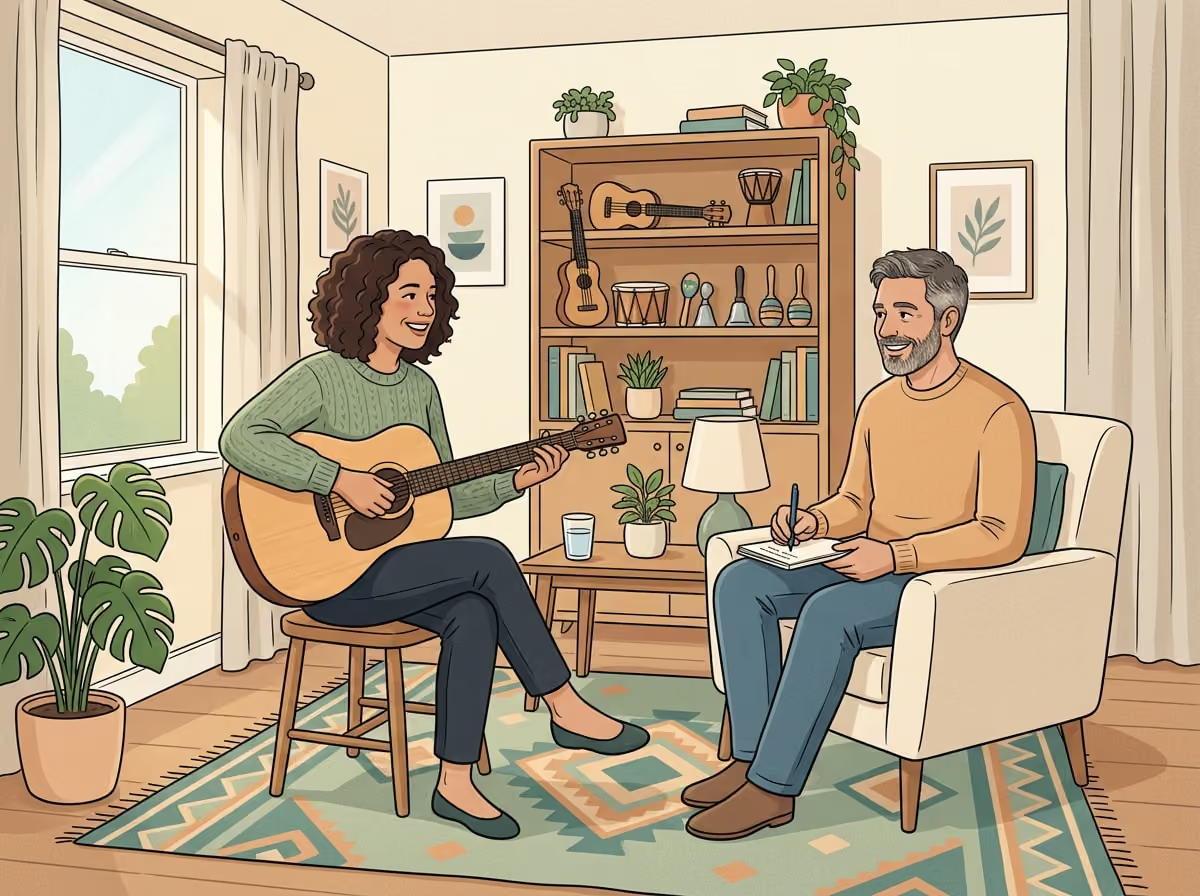
The biggest difference isn't the instruments. It's the relationship and the goals. Music therapy is personalized care. Sound healing is a shared experience.
What the Research Says About Music Therapy
Music therapy has a much larger research base than sound healing, though the strength of evidence varies by condition. For example, a Cochrane review, one of the most rigorous kinds of evidence summary, found that music therapy added to usual care likely reduces depressive symptoms in the short term compared with usual care alone. Researchers continue to call for larger and longer studies, and music therapy is always best used alongside medical and mental health care, not instead of it.
When Sound Healing Is a Good Fit
Sound healing can be a nice choice when:
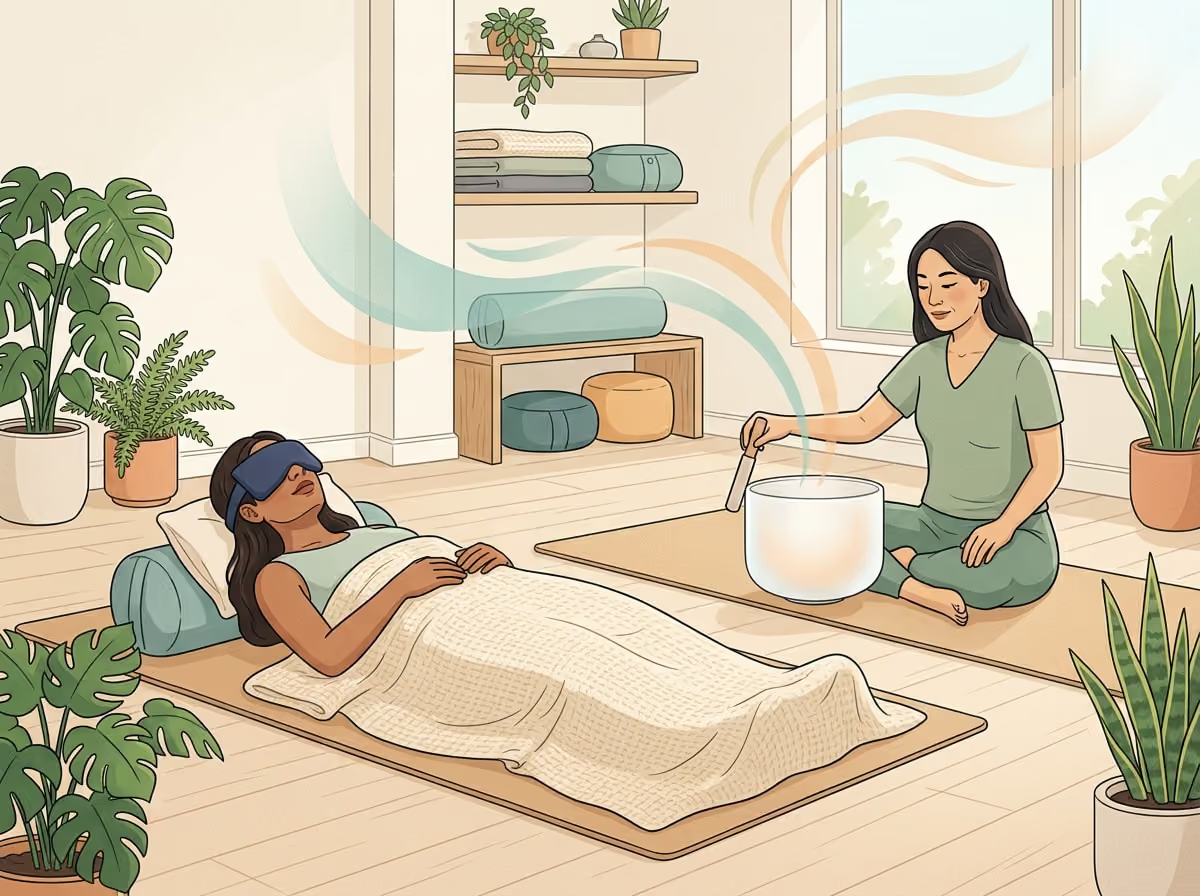
- You want a calming, low-pressure way to relax or unwind.
- You enjoy meditation and want to try a sound-based version.
- You're looking for a group wellness experience, like a sound bath at a yoga studio.
- You don't have a specific health condition you're trying to address.
It's best thought of like a massage or a yoga class: something that can help you feel good, not a treatment.
When You Need a Music Therapist
A board-certified music therapist is the better choice when:
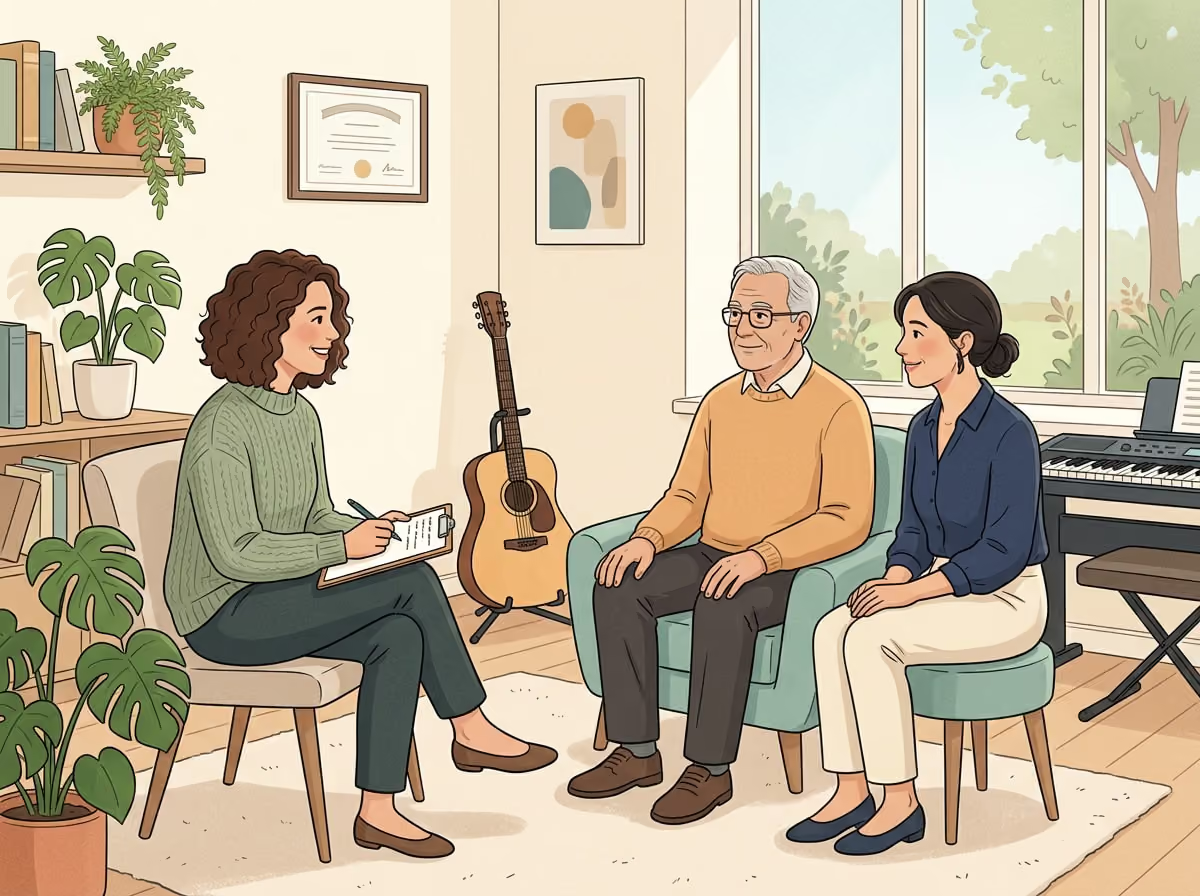
- You're working through anxiety, depression, trauma or grief.
- You or a loved one has a diagnosis such as autism, dementia, ADHD or a neurological condition.
- You want support that's tailored to you, with goals and progress tracking.
- You're recovering from an illness, injury or stroke.
- You'd like your care to coordinate with your doctor or therapist.
Absolutely. Many people enjoy a sound bath for relaxation and work with a music therapist on specific goals. Just keep them in their lanes. A sound bath can be part of your self-care, while music therapy can be part of your care plan.
Questions to Ask Before You Book
For a sound healer: What training have you completed? How loud does the session get? Will instruments be placed on my body, and can I opt out? Is it okay if I need to leave early?
For a music therapist: Are you board certified (MT-BC)? What experience do you have with needs like mine? How do you set goals and track progress? Do you offer telehealth, and do you work with insurance?
Red Flags in Either Field
Whether you're choosing a sound healer or a music therapist, watch out for:
- Promises to cure illness. No responsible practitioner promises that sound or music will cure a disease or replace medical treatment.
- Claims about repairing DNA or organs. These aren't supported by evidence.
- Pressure to stop medication or treatment. Always talk to your doctor before changing any care.
- Vague or missing credentials. A music therapist should be able to show their MT-BC credential. A sound healer should be open about their training.
- Expensive packages with big promises. Be cautious of high prices tied to dramatic claims.
If you're dealing with ongoing pain, sleep problems, anxiety, depression or any new symptoms, talk to a doctor or mental health professional. Music therapy can complement medical and mental health care, and sound healing can support relaxation, but neither replaces proper diagnosis and treatment.
Looking for a qualified music therapist? Our guide on how to find a music therapist explains what to look for. You can also learn about a structured approach some practitioners use in Understanding the Euterpe Method.
FAQ
Is sound healing the same as music therapy?
No. Sound healing is a wellness practice focused on relaxation, and practitioner training is not regulated. Music therapy is a clinical, evidence-based health profession delivered by board-certified music therapists, who complete a music therapy degree, at least 1,200 hours of supervised clinical training and a national exam, and who work toward individualized health goals.
Does sound healing work?
Research suggests sound healing may help some people feel more relaxed and less tense in the short term, but the evidence is limited. Most studies are small and many lack comparison groups. There is no reliable evidence that sound healing cures illness, so it is best used for relaxation alongside, not instead of, medical care.
Do sound healers need a license?
No. In the United States, there is no national license or standard credential for sound healers, and training ranges from short workshops to longer certificate programs. Music therapists, by contrast, hold the MT-BC board certification, and some states also require a license or protect the music therapist title.
What instruments are used in sound healing?
Sound healing commonly uses metal and crystal singing bowls, gongs, chimes, tuning forks, drums, ocean drums and rain sticks, along with the human voice. Some practitioners place tuning forks or bowls on or near the body. Music therapists use a much wider range of instruments, as well as singing and songwriting.
Can I do both sound healing and music therapy?
Yes. Many people enjoy sound healing or sound baths for relaxation while working with a music therapist on specific health or mental health goals. It's helpful to let your music therapist know about other practices you use, and to talk with your doctor about your overall care plan.
How do I find a qualified music therapist?
Look for the MT-BC credential, which shows a music therapist is board certified by the Certification Board for Music Therapists. You can ask about their experience with your specific needs, whether they offer telehealth, and whether they work with insurance. Many practices, including Incadence, offer a free consultation to see if it's a good fit.
One Last Thing
Sound healing and music therapy aren't rivals. They simply do different jobs. One helps you relax. The other is a clinical path toward specific goals, guided by a trained professional and connected to your broader care.
If you're not sure which one fits what you're going through, we're happy to talk it through with you.
