
- Many people with ADHD focus better with some background sound, and research suggests this may be because a little extra stimulation helps an under-aroused brain stay engaged.
- A 2024 meta-analysis found that white and pink noise gave a small boost on attention tasks for young people with ADHD, but slightly worsened performance for people without ADHD.
- Instrumental music, steady tempos and familiar tracks tend to work better for focus than new songs with lyrics.
- Music therapy for ADHD is promising but the research is still limited. It may support attention, impulse control and emotional regulation.
- Music is a helpful tool, not a treatment. It works alongside evidence-based ADHD care like behavior therapy and medication.
If you have ADHD, you may already know this feeling. The room is silent, you sit down to work, and your brain immediately wanders to everything except the task in front of you. Then you put on the right playlist and, somehow, you can finally get going.
You're not imagining it. Music and sound can genuinely change how focused you feel. But not all music works the same way, and what helps one person can distract another. Here's what research says about music for ADHD, how to choose the right sounds and when music therapy might be worth exploring.
Why Music Can Help With ADHD Focus
ADHD affects attention, activity levels and impulse control. One common theory is that many people with ADHD have a brain that is under-stimulated during low-interest tasks. When a task feels boring, the brain goes looking for something more interesting.
Background sound may provide just enough extra stimulation to keep attention on the task. Researchers call this idea optimal arousal: everyone has a sweet spot of stimulation where they work best, and for many people with ADHD that sweet spot is a bit higher than silence.
Music also affects mood and motivation. Studies on the brain have linked enjoyable music to the release of dopamine, a chemical messenger involved in reward and motivation that plays an important role in ADHD. That may be part of why a favorite song can make a dreaded task feel more doable.
What the Research Says
Research on music and ADHD is growing, but much of it is small. Here's what the better studies show.
White and pink noise
A 2024 systematic review and meta-analysis combined 13 studies of children and college-age young adults with ADHD or high ADHD symptoms. It found that white and pink noise produced a small but meaningful improvement on laboratory attention tasks. Interestingly, the same noise slightly worsened performance for people without ADHD.
The researchers found no qualifying studies on brown noise, despite its popularity on social media. That doesn't mean brown noise can't help. It just means it hasn't been properly tested yet.
Music listening
A 2025 systematic review of 20 studies looked at how people with ADHD process music and how music listening and music-based interventions affect them. Most studies suggested music listening had positive effects in areas like attention and task performance, though results depended on the type of music and the task.
Music therapy
Evidence for music therapy itself is more limited. A 2025 meta-analysis of music therapy for children and teens with ADHD found a trend toward improvement in symptoms, but the result did not reach statistical significance and the studies varied widely. An earlier 2023 systematic review reported that active music therapy, like playing instruments, was linked to improvements in social skills and impulsivity in some studies.
The honest summary: research suggests music can be a useful focus aid for many people with ADHD, and music therapy shows promise, but larger and better-designed studies are still needed.
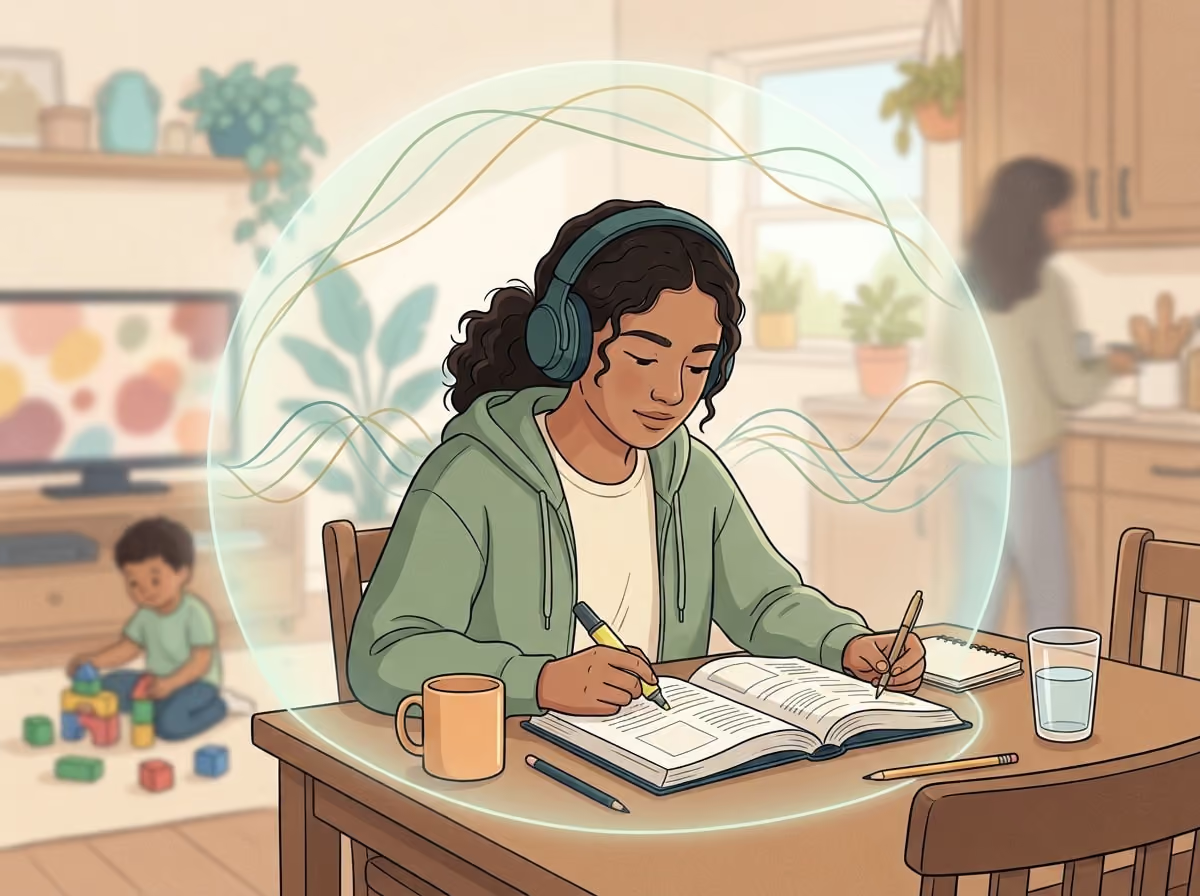
In the 2024 meta-analysis, white and pink noise helped people with ADHD but slightly hurt focus for people without ADHD. That's one reason a roommate, partner or classmate may find your "focus noise" distracting while it helps you. Headphones can keep everyone happy.
The Best Types of Music for ADHD Focus
There's no single best playlist for ADHD. Use this table as a starting point and notice how your own brain responds.
| Type of sound | Why it may help | Watch out for |
|---|---|---|
| Instrumental lo-fi or chillhop | Steady beat, no lyrics, low surprise | Can become so familiar it fades out, so rotate playlists |
| Classical or ambient | Calm, predictable, good for reading and writing | Dramatic pieces with sudden loud parts can pull attention |
| Video game soundtracks | Designed to keep you engaged without distracting from a task | Some tracks are intense, so choose calmer ones |
| White or pink noise | The best-studied option for ADHD attention | Keep the volume low and safe for your hearing |
| Brown noise | Deeper, gentler sound many people prefer | Not yet studied in ADHD research |
| Binaural beats | Popular for focus and relaxation | Research is mixed and still early |
| Upbeat favorite songs | Boosts mood and energy for boring tasks like cleaning | Lyrics can compete with reading and writing |
If you're curious about binaural beats, we've looked at the evidence in our article on whether binaural beats are scientifically proven. You may also see "focus frequencies" promoted online. Our guide to solfeggio frequencies explains why those claims go far beyond the research.
Should music for ADHD have lyrics?
For tasks that involve language, like reading, writing or studying, music without lyrics usually works better. Your brain tries to process the words you hear and the words on the page at the same time. For tasks that don't involve language, like tidying, exercising or simple data entry, songs with lyrics may give you the energy boost you need.
How to Build Your ADHD Focus Playlist
A little planning can turn music into a reliable focus tool:
- Match the music to the task. Keep a calm instrumental playlist for deep work and a high-energy playlist for chores and boring tasks.
- Choose familiar tracks. New music tends to grab attention. Songs you know well fade into the background more easily.
- Look for a steady tempo. Music without big changes in volume or speed is less likely to pull you away from your work.
- Make it long. Choosing the next song is a distraction. A playlist of an hour or more lets you start and keep going.
- Use music as a start signal. Playing the same playlist each time you begin work can help train your brain to switch into focus mode.
- Keep the volume low. Background sound should be just loud enough to cover distractions, and safe for long listening.
Pair music with a timer. Build a playlist that's exactly 25 minutes long and work until it ends, then take a short break. When the music stops, you know it's break time without checking the clock. Many people with ADHD find this easier than watching a timer.

Music for Different ADHD Moments
Music can help with more than just focus. Many people with ADHD use it throughout the day:
- Getting started. An upbeat song can help you overcome the hardest part of a task: beginning.
- Transitions. A specific song can signal that it's time to move from one activity to the next, which is especially helpful for children.
- Movement breaks. Dancing or moving to one or two songs can release restless energy before you sit back down.
- Calming down. Slower music can help with frustration or overwhelm, which often come with ADHD.
- Winding down for sleep. Many people with ADHD struggle with a busy mind at night. Calm, familiar music or soft noise may help some people relax before bed.
When Music Gets in the Way
Music isn't always helpful. It can backfire when:
- you spend more time choosing songs than working;
- the music is new, exciting or full of lyrics you want to sing along to;
- the task is complex and you need every bit of attention, like taking a difficult exam;
- you're sensitive to sound, or the music adds to feeling overwhelmed.
Some people with ADHD genuinely focus best in quiet. That's okay. The goal is to find what works for your brain, not to follow what works for someone else.
Music Therapy for ADHD: What It Adds
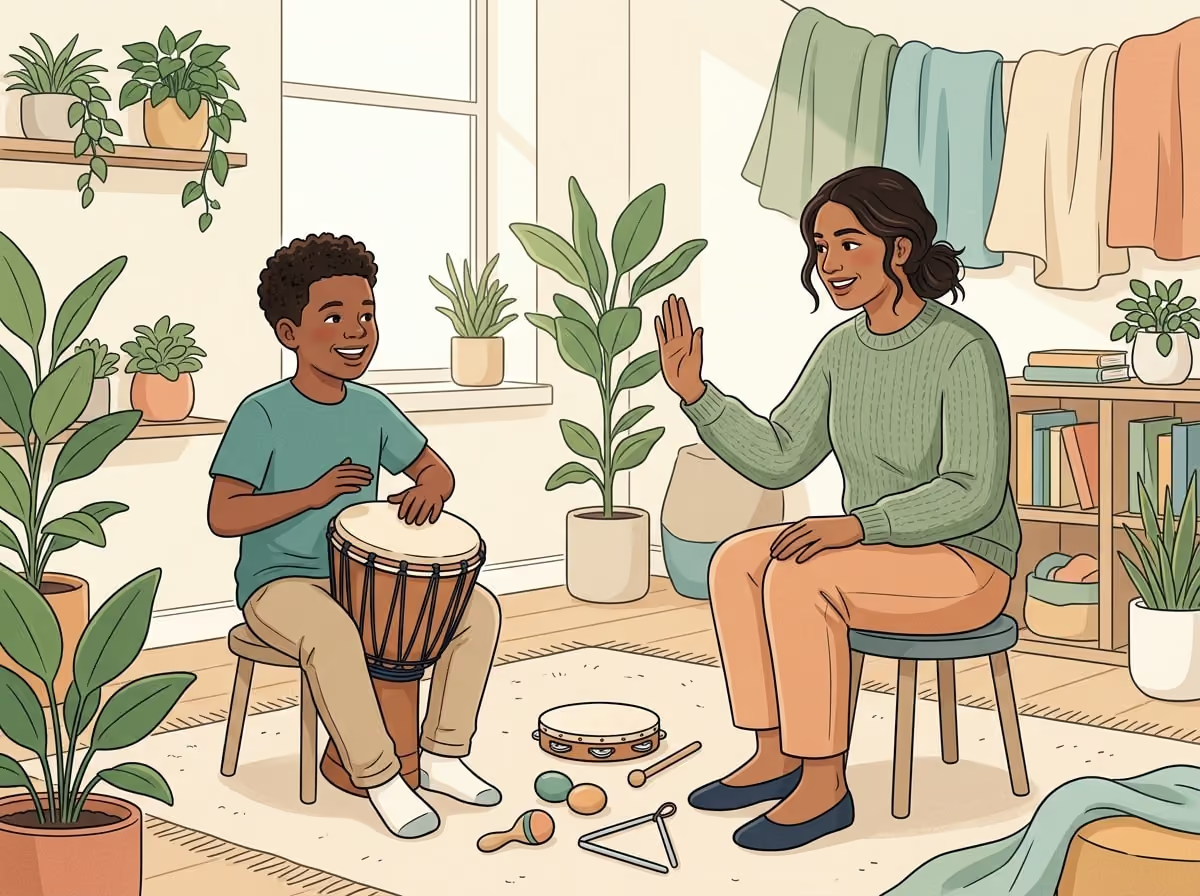
Listening to a focus playlist on your own is different from music therapy. In music therapy, a board-certified music therapist uses active music-making to work on specific goals. For ADHD, that may include:
- Rhythm and timing games that practice waiting, listening and responding at the right moment, which can support impulse control.
- Drumming activities that channel physical energy in a structured way.
- Musical games with rules, like stopping when the music stops, which practice attention and self-control.
- Songwriting that helps children and teens express frustration, build confidence and talk about what ADHD feels like for them.
- Coping playlists designed with a therapist for specific moments, like homework time or calming down after a hard day.
Music therapy can be especially appealing for children who find traditional talk-based approaches hard to sit through. To learn more about how sessions work, see our guide to what music therapy is.
Music can be a helpful support, but it is not a treatment for ADHD on its own. According to the National Institute of Mental Health, ADHD is typically treated with medication, psychotherapy and behavioral approaches, education or training, or a combination. Talk with your doctor or your child's pediatrician about your full care plan, and don't stop or change any medication without medical advice.
FAQ
Does music help with ADHD?
For many people, yes. Research suggests some background sound can improve focus for people with ADHD, possibly by providing extra stimulation that keeps attention on the task. A 2024 meta-analysis found that white and pink noise gave a small benefit on attention tasks for young people with ADHD. Effects vary from person to person.
What is the best music for ADHD focus?
Instrumental music with a steady tempo, like lo-fi, ambient, classical or video game soundtracks, tends to work well for focus. White or pink noise is the best-studied option. Familiar tracks are usually less distracting than new songs, and music without lyrics works better for reading and writing.
Is brown noise good for ADHD?
Many people with ADHD say brown noise helps them focus, but it hasn't been studied yet in ADHD research. A 2024 meta-analysis found no qualifying studies of brown noise. White and pink noise have more evidence. If brown noise helps you, it's generally a low-risk tool to use at a safe volume.
Is it bad to listen to music with lyrics when you have ADHD?
Not necessarily. Lyrics can compete with language-based tasks like reading or writing, so instrumental music is usually better for studying. For tasks like cleaning, exercising or routine work, songs with lyrics can boost energy and motivation.
Can music therapy help children with ADHD?
Music therapy shows promise for children with ADHD, with some studies reporting improvements in impulsivity, social skills and emotional regulation. The research is still limited and mixed, so music therapy is best used alongside evidence-based ADHD treatment rather than instead of it.
Can music replace ADHD medication?
No. Music can support focus and mood, but it is not a replacement for ADHD medication or other evidence-based treatment. Talk with your doctor before making any changes to medication.
One Last Thing
There's no perfect ADHD playlist, only the one that works for you right now. Experiment, pay attention to what helps, and give yourself permission to change it up. And if you'd like a more structured way to use music for focus, regulation or confidence, a music therapist can help you build it.
