
- Music therapy for autism uses singing, playing, listening and songwriting, guided by a board-certified music therapist, to support goals like communication, connection and emotional regulation.
- A 2022 Cochrane review found that music therapy probably increases the chance of overall improvement and likely improves quality of life for autistic people, with no sign of harm.
- The evidence is less clear for specific skills like social interaction and verbal communication, and one large trial found no difference in symptom severity, so expectations should stay realistic.
- Music therapy works best as one part of a wider support plan that can include speech therapy, occupational therapy and school supports.
- Sessions can happen in person or through telehealth, and goals should always reflect what matters to the autistic person and their family.
Many parents notice it early. Their child who struggles with conversation can sing every word of a favorite song. A teenager who shuts down when the classroom gets loud relaxes the moment their headphones go on. An adult who finds small talk exhausting lights up when someone hands them a drum.
Music seems to reach many autistic people in a way that words sometimes don't. Music therapy builds on that connection with structure and clinical training. This guide explains what music therapy for autism is, what the research actually shows, what happens in a session and how to find the right therapist.
What Is Music Therapy for Autism?
Music therapy for autism is the clinical use of music experiences, such as singing, playing instruments, improvising, listening and songwriting, by a credentialed music therapist to help an autistic person work toward individual goals in areas like communication, social connection, emotional regulation and daily living skills.
That definition follows the way the American Music Therapy Association describes the profession as a whole. If you're new to the field, our guide to what music therapy is and how it works covers the basics.
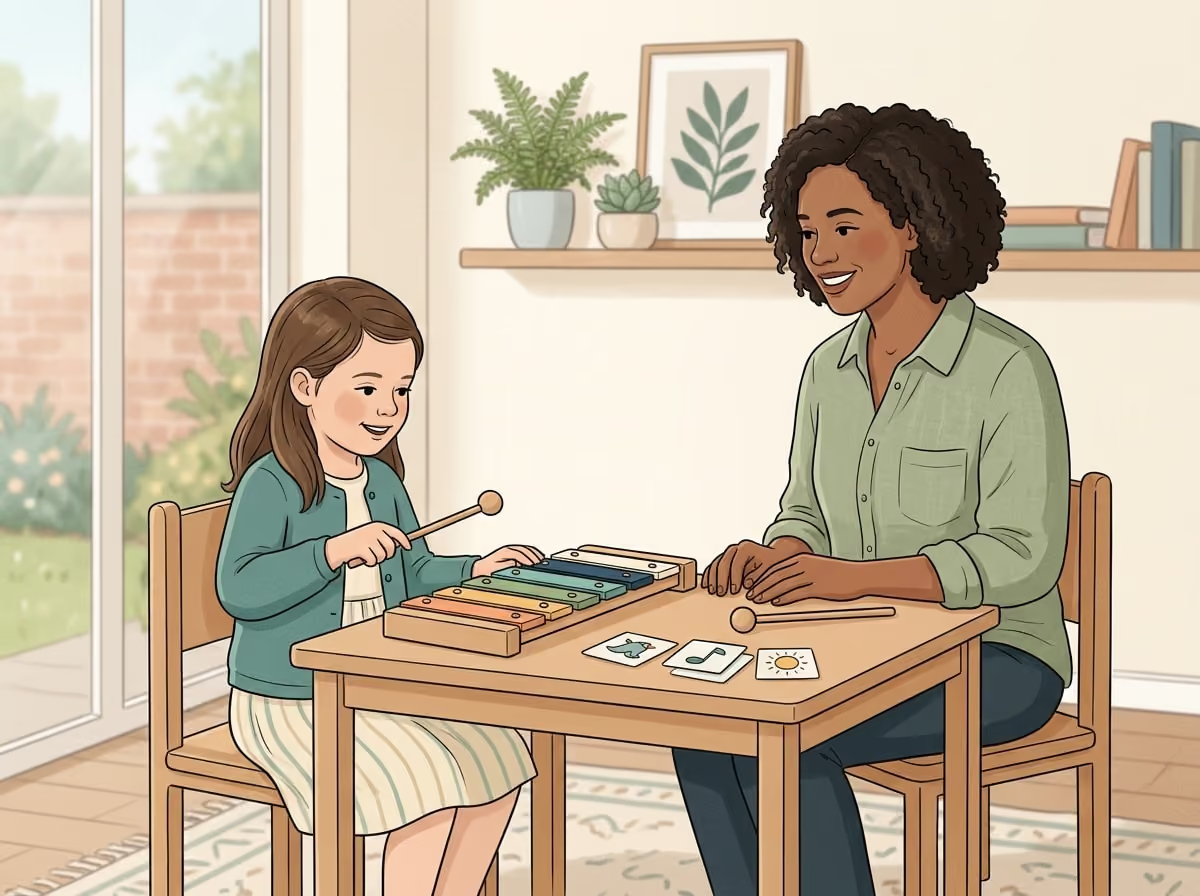
The important part is that music therapy is not music lessons and not simply playing calming songs in the background. The music therapist watches how the person responds, adapts every activity in the moment and tracks progress toward goals over time. The music is a tool for connection and growth, not a performance.
Music therapy has been used with autistic children since the 1950s, and today board-certified music therapists work with autistic people of every age in schools, clinics, homes and online.
Why Music Can Be a Good Fit for Autistic People
Every autistic person is different, so music won't click for everyone. But there are a few reasons it often feels like a natural fit:
- Music is predictable. Songs have patterns, repetition and clear beginnings and endings. That structure can feel safe and make new skills easier to practice.
- Music doesn't require words. A drum beat, a shared rhythm or a melody can be a way to communicate and take turns, even for someone who speaks little or not at all.
- Music is motivating. Many autistic people have strong musical interests. A therapist can use a favorite song or instrument to make goals feel meaningful instead of like work.
- Music can be adjusted for the senses. Volume, tempo and instruments can be changed in real time to match someone's sensory needs, whether they seek more input or need less.
- Singing can support speech. Some people find it easier to say words when they are sung or chanted with rhythm, which a therapist can use as a bridge toward spoken language.
The authors of the latest Cochrane review on this topic chose to use identity-first language, "autistic people," because many autistic adults say they prefer it. Others prefer "people with autism." A good music therapist will ask which language you or your child prefer and follow your lead.
What the Research Says About Music Therapy for Autism
Research on music therapy for autism is more developed than for many other conditions, but the picture is still mixed. Here's an honest summary.
The Cochrane review
The strongest evidence comes from a 2022 Cochrane review of music therapy for autistic people, which pooled results from 26 studies with 1,165 participants. Cochrane reviews are one of the most rigorous types of evidence summary in health care.
Compared with placebo therapy or standard care, the reviewers found that music therapy:
- probably increases the chance of global improvement, meaning overall positive change, by the end of therapy;
- likely helps reduce overall autism symptom severity and improve quality of life;
- probably does not cause adverse effects.
However, the reviewers could not say whether music therapy improves social interaction or verbal and non-verbal communication by the end of therapy. They also noted that more research is needed on long-term effects.
A large trial with a different result
One of the biggest single studies, the TIME-A trial, followed 364 autistic children in nine countries. It found that five months of improvisational music therapy, added to enhanced standard care, did not lead to a significant difference in symptom severity compared with enhanced standard care alone.
That doesn't mean music therapy doesn't help. Many families and therapists report meaningful changes that standard symptom scales may not capture, like a child who starts initiating play or a calmer bedtime routine. But it does mean you should be cautious about anyone who promises dramatic results.
What this means for families
Research suggests music therapy can be a safe, enjoyable and potentially helpful part of support for autistic people. It works best when goals are specific, progress is tracked and it sits alongside other supports rather than replacing them.
Goals Music Therapy Can Support
A music therapist starts with an assessment and builds goals with the autistic person and their family. Common goal areas include:
- Communication. Using songs to practice requesting, naming feelings, answering questions or using a communication device.
- Social connection. Taking turns on instruments, sharing attention on the same activity, and playing music together in pairs or small groups.
- Emotional regulation. Learning songs or rhythms that help calm the body, and finding music that matches and then gently shifts a mood.
- Sensory processing. Exploring sounds and textures at a comfortable pace and building tolerance to new sensory experiences.
- Motor skills. Using rhythm to support coordination, timing, fine motor skills on instruments and gross motor skills through movement.
- Daily routines. Creating short songs for transitions like brushing teeth, leaving the house or getting ready for bed.
- Self-expression. Writing songs or improvising to share thoughts and feelings that are hard to put into words.
What a Music Therapy Session Looks Like
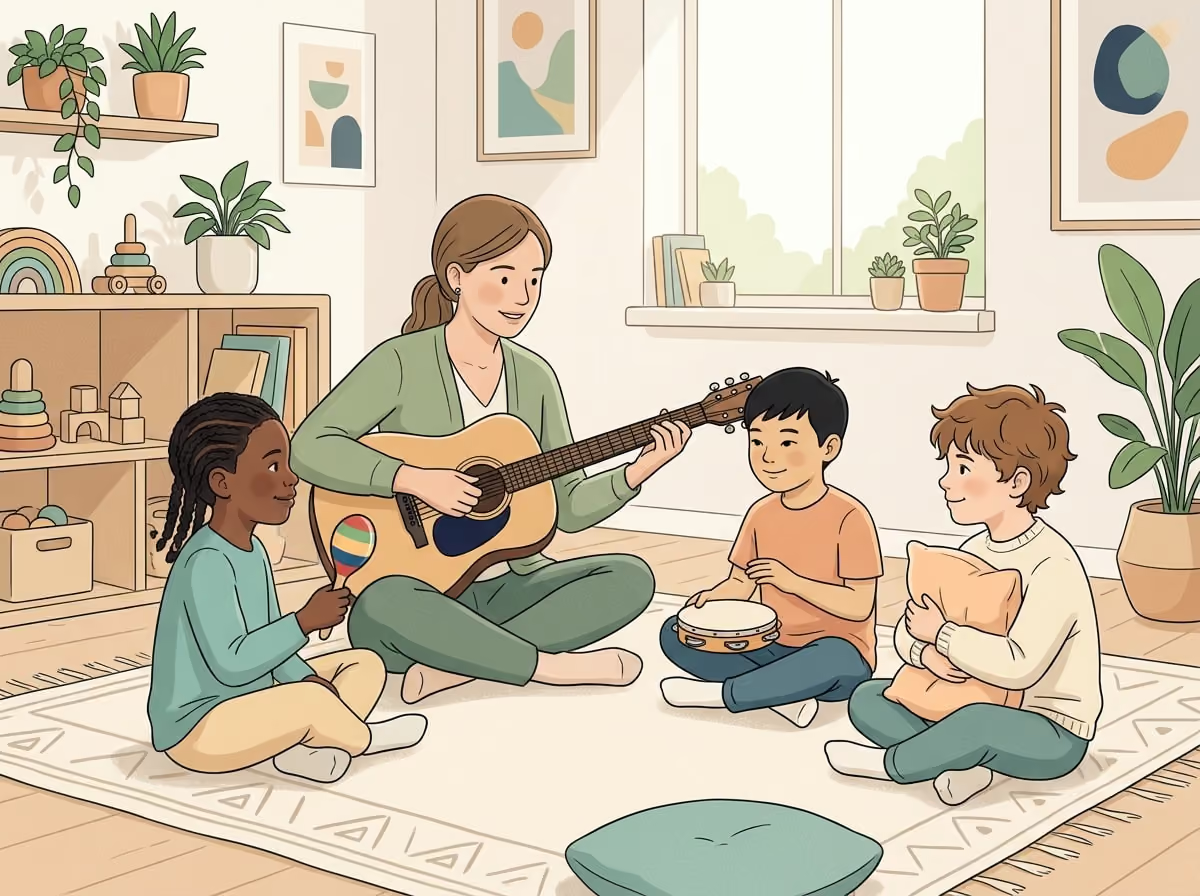
Sessions usually last 30 to 60 minutes and follow a familiar structure, which helps many autistic people feel settled. A typical session might look like this:
| Part of session | What it might look like | Possible goal |
|---|---|---|
| Hello song | The same short song each week, using the person's name | Predictability, greeting, attention |
| Instrument play | Drums, shakers or a keyboard, with turn-taking and copying rhythms | Joint attention, imitation, impulse control |
| Singing with choices | Fill-in-the-blank songs or picking the next verse | Language, requesting, decision-making |
| Movement | Moving to music that speeds up, slows down and stops | Body awareness, regulation, following cues |
| Calming activity | Slower music, deep breathing or a quiet listening moment | Self-regulation, calming strategies |
| Goodbye song | A closing song that signals the session is ending | Transitions, closure |
For teens and adults, sessions often look different. They might focus on songwriting, learning an instrument as a coping tool, building a playlist for stressful moments, or talking through feelings that come up in a song. You don't need any musical skill to take part.
Music Therapy for Autistic Adults
Most autism research and services focus on children, but music therapy isn't only for kids. Autistic adults may use music therapy to manage anxiety, work through burnout, process difficult experiences, build social confidence or simply have a space where they can express themselves on their own terms.
For adults, goals are set by the person, not by a parent or school. A good therapist respects autistic identity and focuses on wellbeing and the person's own priorities rather than on making someone appear less autistic.
How Music Therapy Fits With Other Supports
Music therapy rarely works alone. Many autistic children and adults also work with speech-language pathologists, occupational therapists, psychologists, behavioral specialists or school teams. Music therapy can reinforce what's happening in those settings. For example, a music therapist might set a speech goal to a song so it's easier to practice at home.
If you're already working with other professionals, let your music therapist know. With your permission, they can coordinate so everyone is working toward the same goals.
Pick one daily routine that tends to be stressful, like getting shoes on. Make up a short, simple song about the steps, set to a tune your child already knows. Sing it the same way every time. Many families find that a predictable song makes transitions smoother, and it's an easy idea to bring to a music therapist to build on.
Can Music Therapy for Autism Be Done Online?
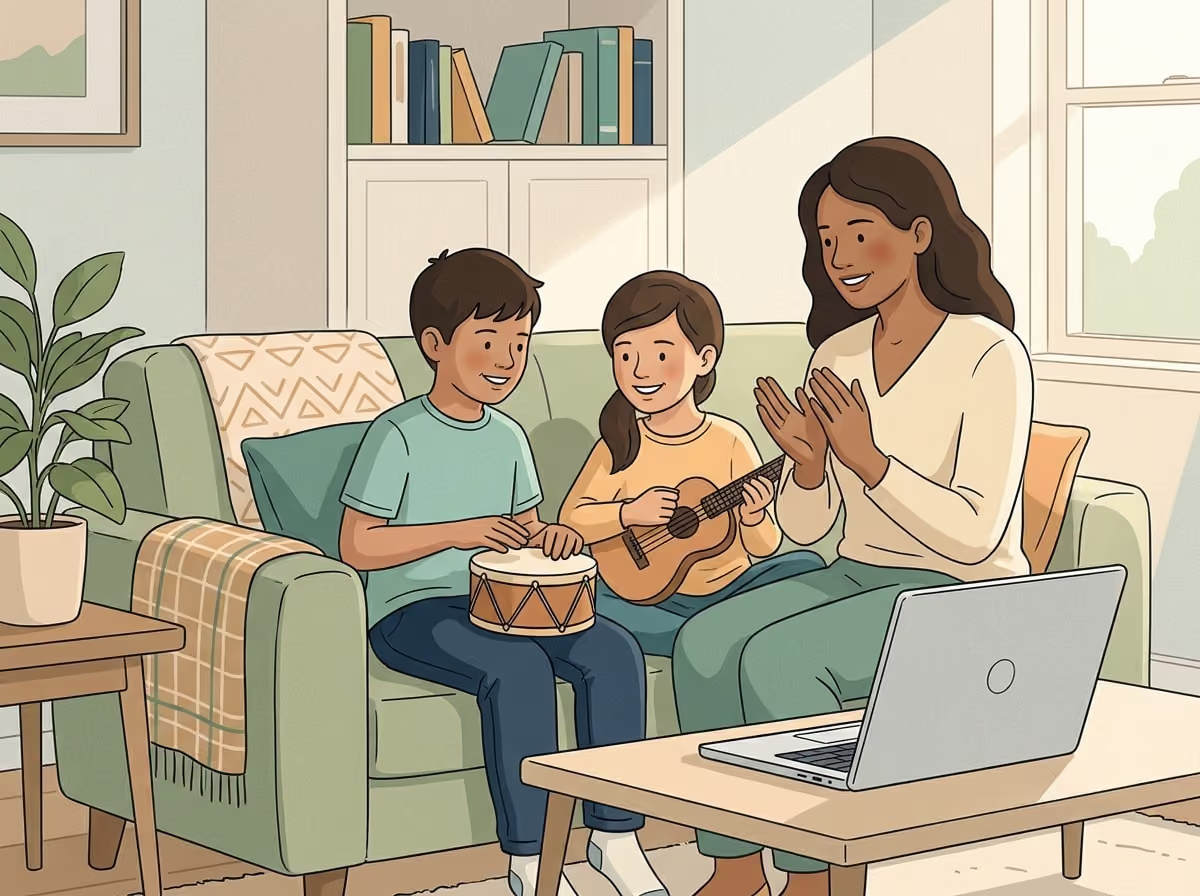
Yes. Many board-certified music therapists offer telehealth sessions. Online music therapy can include singing, rhythm games with household items, movement, songwriting and listening activities. For some autistic people, being at home in a familiar space makes sessions feel easier and less overwhelming.
Telehealth can also help families who live far from a music therapist or have busy schedules. A caregiver may be more involved in online sessions with young children, which can make it easier to carry activities into everyday life.
How to Find a Qualified Music Therapist
In the United States, look for the MT-BC credential, which means the therapist is board certified by the Certification Board for Music Therapists. To earn it, music therapists complete an approved degree, at least 1,200 hours of supervised clinical training and a national exam. This is different from someone who offers music classes or sound healing, which is not the same as music therapy.
Questions worth asking a music therapist:
- What experience do you have with autistic children, teens or adults?
- How do you set goals, and how will we know if therapy is helping?
- How do you adapt sessions for sensory needs?
- Do you offer telehealth or home visits?
- Can you coordinate with my child's other therapists or school team?
Cost and Insurance
Costs vary by location, session length and setting. Some insurance plans cover music therapy when it's part of a documented treatment plan, and some states include it in Medicaid waiver programs for people with developmental disabilities. For school-age children, music therapy can sometimes be added to an IEP as a related service if the team agrees it's needed for the child to benefit from their education.
Coverage rules change often, so check with your insurer, your state's developmental disability services and your child's school team. Many music therapy practices can help you understand your options.
Music therapy is a complement to medical, developmental and educational care, not a replacement for it. Talk with your child's pediatrician, developmental specialist or your own doctor about your full support plan, especially if there are new concerns about sleep, anxiety, behavior or communication. If you or someone you care about is in crisis, call or text 988 in the US to reach the Suicide and Crisis Lifeline.
FAQ
Does music therapy help autism?
Research suggests music therapy can help many autistic people. A 2022 Cochrane review found it probably increases the chance of overall improvement and likely improves quality of life, without causing harm. Evidence is less clear for specific skills like social interaction and communication, so music therapy works best as one part of a wider support plan.
What age is best to start music therapy for autism?
There is no single best age. Music therapists work with toddlers, school-age children, teens and adults. Early support can be valuable for young children, but autistic teens and adults can also benefit, with goals that reflect their own priorities.
Does my child need to be musical to benefit?
No. Music therapy does not require any musical skill. The music therapist adapts activities to the person's abilities and interests. The focus is on communication, connection and regulation, not on learning to perform.
How long does it take to see results?
It depends on the person and the goals. Some families notice changes like improved engagement within a few sessions, while goals such as new communication skills usually take months of regular sessions. Your music therapist should review progress with you regularly.
Is music therapy the same as music lessons for autistic kids?
No. Music lessons focus on learning to play music. Music therapy uses music as a tool to reach non-musical goals, like communication or emotional regulation, and is provided by a board-certified music therapist who has clinical training.
Can autistic adults do music therapy?
Yes. Autistic adults use music therapy to manage anxiety and stress, recover from burnout, express emotions and build confidence. Sessions are shaped around the adult's own goals and can happen in person or online.
One Last Thing
Music meets many autistic people right where they are. Music therapy won't change who someone is, and it shouldn't try to. What it can do is open another path for communication, connection and calm, guided by a professional who takes the time to understand the person in front of them.
